What is Tibet Uprising Day?
- Mar 10
- 3 min read
Every year on March 10, Tibetans around the world and human rights advocates mark Tibet Uprising Day — a commemoration of one of the most dramatic turning points in modern Tibetan history.

What Happened on March 10, 1959?
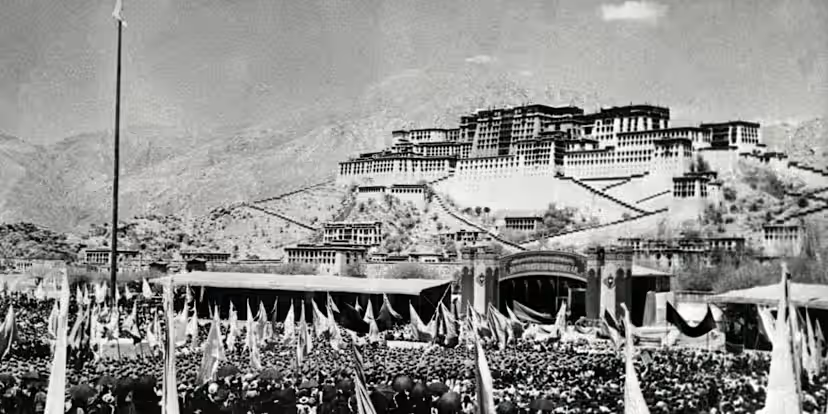
On that morning in Lhasa, tens of thousands of Tibetans surrounded the Norbulingka Palace, the summer residence of the 14th Dalai Lama, Tenzin Gyatso. Rumors had spread that Chinese authorities planned to detain him, and crowds gathered in a spontaneous act of protection and defiance. The demonstration quickly grew into a full-scale popular uprising against Chinese rule, which had been established following China's military entry into Tibet in 1950 and the subsequent Seventeen Point Agreement of 1951.
The uprising was swiftly and violently suppressed by the People's Liberation Army. Fighting erupted across Lhasa, resulting in thousands of deaths. The Dalai Lama was forced to flee across the Himalayas into exile in India, where he established the Central Tibetan Administration in Dharamsala — a government-in-exile that continues to operate today.
Why Is It Commemorated?
For Tibetans in exile and their supporters worldwide, March 10 is a day of solemn remembrance, political expression, and renewed calls for human rights and cultural preservation. Ceremonies are held in Dharamsala, major cities across Europe and North America, and wherever Tibetan diaspora communities exist.
The Dalai Lama typically delivers a statement on this day, reflecting on the state of Tibet and appealing for dialogue, autonomy, and the protection of Tibetan culture, language, and religion — concerns that remain deeply contested between the Tibetan exile leadership and the Chinese government.

The Broader Context
China considers Tibet an integral part of its territory and characterizes its rule as having brought modernization and economic development to the region. The Tibetan exile movement and many international human rights organizations dispute this framing, pointing to ongoing restrictions on religious practice, freedom of movement, and political expression within the Tibet Autonomous Region.
Tibet Uprising Day thus remains both a historical memorial and a living political moment — a reminder of unresolved tensions between Tibetan identity and aspirations on one hand, and Chinese sovereignty claims on the other.
March 10 is recognized internationally as a symbol of nonviolent resistance. The Dalai Lama, who received the Nobel Peace Prize in 1989, has long advocated a "Middle Way" approach — seeking genuine autonomy for Tibet within China rather than full independence.
The March 1959 uprising in Lhasa was triggered by fears of a plot to kidnap the Dalai Lama and take him to Beijing. When Chinese military officers invited His Holiness to visit the PLA headquarters for a theatrical performance and official tea, he was told he must come alone, and that no Tibetan military bodyguards or personnel would be allowed past the edges of the military camp. On March 10, 300,000 loyal Tibetans surrounded Norbulinka Palace, preventing the Dalai Lama from accepting the PLA’s invitation. By March 17, Chinese artillery was aimed at the palace, and the Dalai Lama was evacuated to neighboring India. Fighting broke out in Lhasa two days later, with Tibetan rebels hopelessly outnumbered and outgunned. Early on March 21, the Chinese began shelling Norbulinka, slaughtering tens of thousands of men, women and children still camped outside. In the aftermath, the PLA cracked down on Tibetan resistance, executing the Dalai Lama’s guards and destroying Lhasa’s major monasteries along with thousands of their inhabitants.
China’s stranglehold on Tibet and its brutal suppression of separatist activity has continued in the decades following the unsuccessful uprising. Tens of thousands of Tibetans followed their leader to India, where the Dalai Lama has long maintained a government-in-exile in the foothills of the Himalayas.

Comments