Bay Area Friends of Tibet: 25 Years of Service to the Just Cause of Tibet
- Nov 6, 2008
- 8 min read
Updated: 10 hours ago
A Review Presented at the 23rd Annual Tibet Day, Fort Mason, San Francisco — December 6, 2008
Introduction
On December 6, 2008, the Bay Area Friends of Tibet (BAFoT) gathered at Fort Mason in San Francisco to mark a profound milestone: 25 years of unbroken dedication to the Tibetan people and their struggle for freedom. The occasion was the 23rd Annual Tibet Day, and it offered an opportunity not only to celebrate, but to reflect on a quarter-century of grassroots activism, community building, diplomatic outreach, and tireless advocacy on behalf of an occupied nation.
From a modest founding meeting in Berkeley in 1983 to co-organizing international Tibet Support Group conferences in India in 2008, BAFoT's journey is one of sustained moral commitment — and a testament to what a small, determined community can accomplish.

Mission: A Bridge Between Americans and Tibetans
BAFoT was established with a clear and enduring mission: to serve as a support group dedicated to assisting Tibetans in their struggle for the right to self-determination, independence, and the preservation of their culture. The organization has always understood itself as a bridge — connecting Americans with Tibetans, and local communities with the global cause.
To fulfill this mission, BAFoT set out to:
Educate the public about Tibet and the Tibetan people
Organize grassroots projects and events
Cooperate with other Tibet Support Groups (TSGs) locally and internationally
These foundational commitments have guided every initiative BAFoT has undertaken across its 25 years.
Founding: October 9, 1983
BAFoT was founded on Sunday, October 9, 1983, at 2961 Bienvenue Avenue, Berkeley, California 94705. Twenty-nine individuals put their names to the founding document, a diverse gathering of Tibetan exiles, American activists, scholars, and concerned citizens united by a shared belief in Tibet's just cause.
The original BAFoT founders were:
Carol Fields
Chris Ng
Bertha Ng
Jim Quartieri
Elissa Mannheimer
Cheimed Lee
Adam Druckman
Jeff Wagner
Ritu Sarin
Eric Ingersoll
George Nichols
Ruth Eckland
Jigme Yugay
Nima Yugay
Dorje Lama
Pema Wangyal
Tashi Norbu
Geshe Thardo
Michael Van Walt
Tenzin Sonam
Judy Weitzner
Tsewang Chodon Tatz
Chris Kemper
Rose Berryessa
Gail Harris
Thepo Tulku
Geshe Lobsang Gyatso
Lobsang Chonjor
Atul Vaidya
Among these founders were individuals who would go on to play lasting roles in the Tibetan freedom movement — including Ritu Sarin and Tenzin Sonam, who became internationally recognized filmmakers documenting the Tibetan cause, and Jigme Yugay Raptentsetsang, who helped narrate BAFoT's early history at the 25th anniversary event.
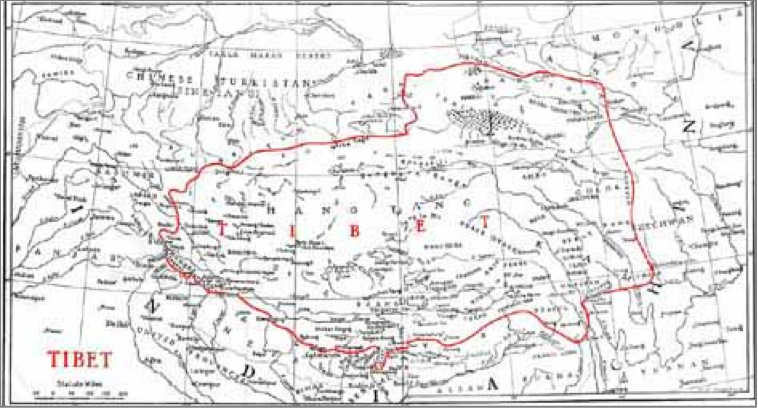
Background: Why Tibet?
To understand BAFoT's founding, one must understand the situation facing Tibet in the early 1980s. Tibet — often called "The Land of Snows" — had been invaded and occupied by the People's Republic of China beginning in 1950. By the time BAFoT was founded, Tibetans had been living under occupation for more than three decades. The Tibetan people faced:
Subjugation and suppression of their political freedoms
Status as a minority in their own homeland
A deep crisis in cultural, religious, and social life
A large exile community scattered across India and the world
Tibet's status on the international stage remained precarious, and advocacy organizations like BAFoT were essential to keeping the cause alive in the consciousness of the Western public.

Early Years (1983–1990)
In its founding years, BAFoT established the rhythms and traditions that would define its next two and a half decades. The 1989 BAFoT Board received a blessing from His Holiness the Dalai Lama on Mount Tamalpais — a moment that symbolized the spiritual grounding of the organization's mission.
A landmark event of this period was the awarding of the Nobel Peace Prize to His Holiness the Dalai Lama in 1989, a moment of international recognition that validated the nonviolent approach at the heart of the Tibetan struggle and energized Tibet support groups worldwide.

Three Tibet Conferences (Late 1980s–Early 1990s)
Among BAFoT's most significant early contributions were three major conferences organized in the late 1980s and early 1990s, each addressing a critical dimension of the Tibetan cause:
1988 — A conference centered on the Five Point Peace Plan, proposed by His Holiness the Dalai Lama in 1987. The plan called for the transformation of Tibet into a zone of peace, the cessation of population transfer, respect for human rights and democratic freedoms, the restoration of Tibet's natural environment, and the commencement of earnest negotiations on the future status of Tibet.
1990 — Endangered Tibet, a conference focused on the ecological disaster facing Tibet, bringing environmental dimensions of the Chinese occupation to public attention.
1992 — Tibet: The Road to Independence, held to commemorate the International Year of Tibet (1991–1992) and to assert Tibet's right to full independence as an essential framework for justice.
These conferences demonstrated BAFoT's commitment to intellectual engagement and public education as tools of advocacy.
The Tibetan Resettlement Project
One of BAFoT's most tangible and life-changing contributions has been the Tibetan Resettlement Project, led by Julia Shepardson. Over the organization's 25 years, BAFoT successfully resettled 67 Tibetans and their families to the Bay Area — providing them with a new home, community support, and a foundation from which to rebuild their lives in freedom. This program gave real, practical meaning to BAFoT's role as a bridge between Americans and Tibetans.
The 1990s: A Decade of Expanding Coalitions
Under the leadership chronicled by Bonnie McCalla, the 1990s saw BAFoT broaden its coalitions and deepen its engagement with both local and international communities.
Key milestones of the decade include:
June 1994 — The Tibetan community of the SF Bay Area joined the local Chinese community to commemorate the Tiananmen Square Massacre, organized in conjunction with TANC (Tibetan Association of Northern California), demonstrating solidarity across communities facing Chinese authoritarian repression.
June 1995 — BAFoT and TANC organized demonstrations at the 50th anniversary of the founding of the United Nations, pressing the international body to uphold the rights of the Tibetan people.
1996 — BAFoT representatives attended the international TSG conference in Washington, DC, strengthening ties with the global Tibet support movement.
January 1997 — BAFoT co-sponsored the Third Western Region Tibet Support Group conference in San Francisco. Representatives from 30 TSGs across 14 western states attended, reflecting BAFoT's growing regional leadership.
June 1997 — BAFoT co-sponsored and coordinated a landmark public talk featuring His Holiness the Dalai Lama alongside two other Nobel Peace Prize laureates: José Ramos-Horta (East Timor) and Rigoberta Menchú (Guatemala) — an event of remarkable moral and political significance.
Throughout the 1990s, BAFoT also co-organized and co-sponsored an annual calendar of cultural and political events, including:
Annual Losar (Tibetan New Year) celebrations
Annual Tibetan Uprising Day demonstrations (March 10)
Annual Tibet Day celebrations
Annual celebrations of His Holiness the Dalai Lama's birthday in July
Annual International Human Rights Day demonstrations
Political Alliances and Government Outreach
BAFoT cultivated important relationships with elected officials who championed the Tibetan cause.

Congressman Tom Lantos, a Holocaust survivor and champion of human rights, was a devoted and vocal supporter of His Holiness the Dalai Lama and a dear friend of Tibet. His staff, including Marilyn Wacks, represented him at BAFoT events such as the March 10, 2007 Tibetan National Uprising Day commemoration.
Congresswoman Nancy Pelosi — who would go on to become Speaker of the U.S. House of Representatives — attended Tibet Day in 1999 and was photographed with the BAFoT Board, underscoring the organization's ability to engage the highest levels of American political leadership on behalf of Tibet.


2000–2007: Deepening Engagement
Under leadership reviewed by Diane Hume, the 2000s brought continued momentum. Notable highlights include:
September 2003 — BAFoT co-organized the visit of His Holiness the Dalai Lama with the University of San Francisco, bringing his message of compassion and nonviolence to Bay Area audiences.

September 2003 BAFoT co-organized the visit of His Holiness the Dalai Lama with the University of San Francisco Tibet Day 2004 — BAFoT hosted Ngawang Choephel, a former Tibetan political prisoner, as a featured speaker. Choephel, a Fulbright scholar who had been imprisoned for six years by Chinese authorities for documenting Tibetan folk music, embodied the human cost of the occupation and the power of cultural resistance.

Hosting Former Political Prisoner Ngawang Choephel who was featured at Tibet Day 2004
Throughout this period, BAFoT continued producing its celebrated Tibet Day postcards — beautiful visual tributes to Tibetan culture and the freedom struggle that became cherished keepsakes for the community.

2008: A Year of Urgency and Action
The year 2008 proved to be one of the most politically charged in the Tibetan freedom movement — and BAFoT rose to meet it.

The Olympic Torch Campaign
With the 2008 Beijing Olympics approaching, Tibet supporters around the world saw an opportunity to draw global attention to the occupation. BAFoT was an active member of San Francisco Team Tibet, which co-organized protests around the Olympic Torch Relay as it passed through San Francisco.
The campaign was a remarkable success: through sustained protest and civic pressure, the torch did not set foot anywhere along the official torch route in San Francisco.

Bikers for Tibet and other demonstrators gathered at Ferry Park in San Francisco in a Tibetan Victory Demonstration after the torch was effectively rerouted out of the city.
In August 2008, BAFoT organized protests outside the Chinese Consulate in San Francisco, maintaining pressure during the Olympics themselves.


International Tibet Support Network Meeting

BAFoT co-organized the 2006 regional meeting of the Americas and Australia/New Zealand with the International Tibet Support Network — an event that reinforced BAFoT's role on the international stage.


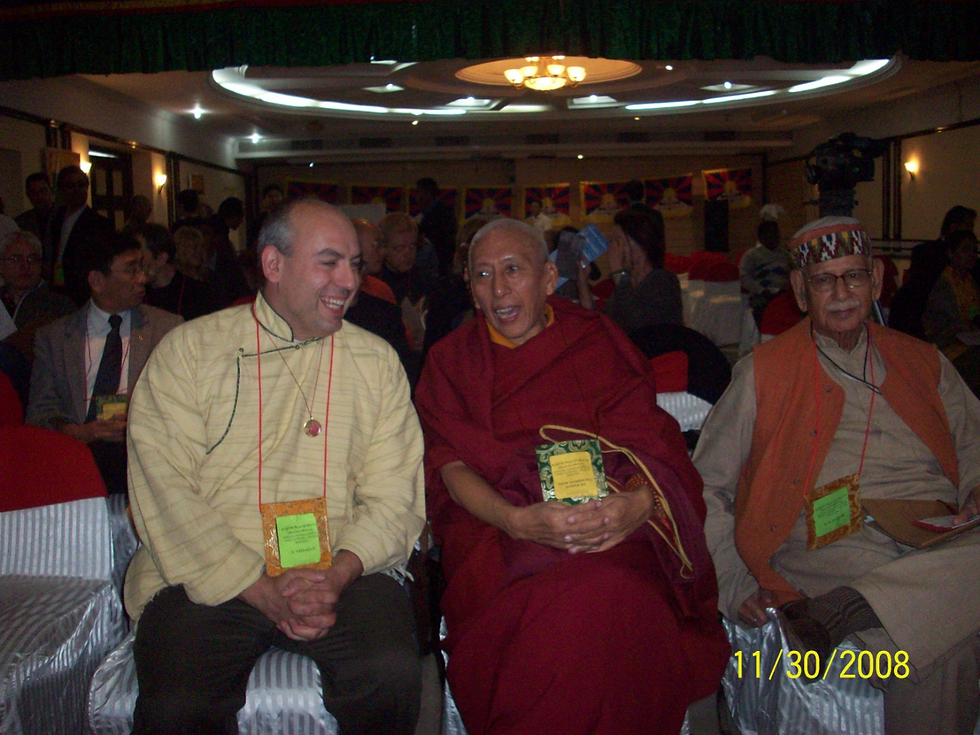
In November 2008, BAFoT President Giovanni Vassallo attended a Special International TSG Meeting in Gurgaon, India (November 28–29, 2008), joined by over 100 representatives from 30 countries. The meeting was a pivotal moment: many attendees recommended that His Holiness the Dalai Lama reassess the Middle Way Approach — his policy of seeking genuine autonomy rather than full independence — if China remained intransigent in negotiations.

At this meeting, Vassallo met with key figures in the Tibetan leadership, including Samdhong Rinpoche, the Prime Minister of the Tibetan Government in Exile, and Lodi Gyari, His Holiness the Dalai Lama's Special Envoy to China — conversations that connected BAFoT's grassroots advocacy directly to the highest levels of Tibetan governance.

25 Years of Action: A Summary
Looking across a quarter century, BAFoT's record of action is extraordinary:
23 Tibet Day Cultural Fairs organized
24 Tibetan National Uprising Day commemorations (March 10)
13 Abducted Panchen Lama observances — marking the disappearance of Gedhun Choekyi Nyima, the child recognized by His Holiness as the 11th Panchen Lama
24 Himalayan Fairs and numerous tablings at community fairs and educational events
Co-organized visits of His Holiness the Dalai Lama and other Tibetan dignitaries
Vigorous and numerous protests, candlelight vigils, and letter-writing campaigns
Local SF Bay Area government outreach for Tibet
Resettlement of 67 Tibetans and their families to the Bay Area
Continued financial and moral support for Tibet and Tibetans
The Way Forward
As BAFoT entered its 26th year, the organization articulated a clear vision for the future under President Giovanni Vassallo:
Putting Tibetans First — centering the needs and voices of the Tibetan community in all advocacy work
Increasing Concrete Government Support — pressing elected officials and government bodies for meaningful policy commitments to Tibet
Spotlight on Chinese Leaders — holding Chinese leadership accountable before the international community
Chinese Outreach — engaging with Chinese citizens and diaspora communities, recognizing that the path to Tibetan freedom runs through dialogue and mutual understanding
Continuing to Educate the Public about Tibet — sustaining the long commitment to awareness-raising that has always been at BAFoT's core

Conclusion
Twenty-five years after its founding in a Berkeley living room, the Bay Area Friends of Tibet had grown into a respected, effective, and internationally connected voice for Tibetan freedom. Its founders — Tibetan exiles and American allies alike — had built something lasting: not just an organization, but a community of conscience.
The 23rd Annual Tibet Day in December 2008 was both a celebration and a recommitment. As the political situation for Tibet remained urgent — with negotiations stalled, Chinese repression ongoing, and the world's attention still needed — BAFoT's mission was as vital as ever.
The story of BAFoT is ultimately the story of what ordinary people, sustained by moral conviction and organized determination, can do on behalf of justice. It is a story still being written.
Bay Area Friends of Tibet — Founded October 9, 1983 · Berkeley, California
Original file:

Comments